Cindy Casciano
Dean of Academic Affairs · Ed.D. Candidate, Instructional Technology
I lead academic affairs at a career-focused postsecondary institution and am completing my Ed.D. in Instructional Technology at American College of Education. My work centers on curriculum development, program oversight, and helping faculty use technology in ways that improve learning.
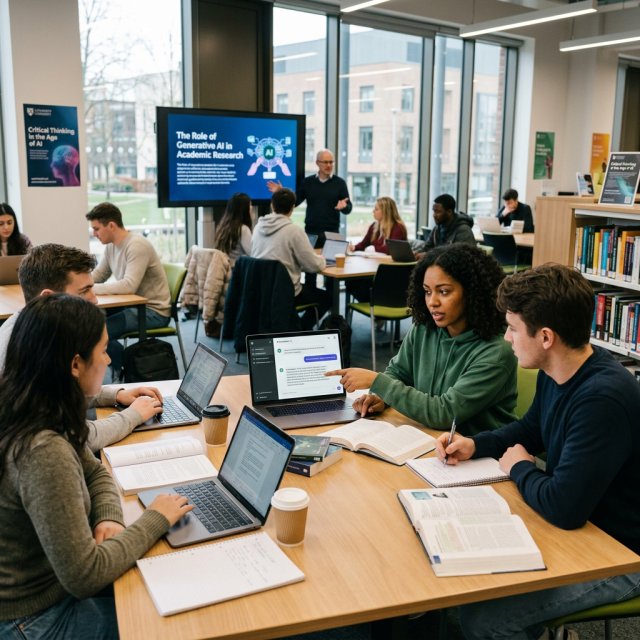
Technology doesn’t improve learning on its own. Thoughtful design does.
Why “Designing for Today’s Learner”?
Today’s learners are often working adults balancing school, jobs, and families, with widely different technology skills and learning needs. Designing for them means planning for that variation from the start. The Universal Design for Learning framework calls for multiple ways to engage, access content, and show understanding (CAST, 2024). The spaces where learning happens matter too: flexibility and easy access to technology are among the most emphasized principles for active-learning spaces (Carlos et al., 2024).
What you’ll find here
Each post connects research to practical decisions educators make every day.
- Instructional design
- Learning spaces and technology
- Generative AI
- Higher education
Join the conversation
These posts are meant to start discussions, not end them. If an idea connects with your own classroom, program, or institution, or challenges your thinking, I’d welcome your perspective in the comments.
References
Carlos, V., Reses, G., & Soares, S. C. (2024). Active learning spaces design and assessment: A qualitative systematic literature review. Interactive Learning Environments, 32(6), 2925–2942. https://doi.org/10.1080/10494820.2022.2163263
CAST. (2024). Universal design for learning guidelines. https://udlguidelines.cast.org


